The VALIANT

Friday, 19 December 2008

Brazil to boost troops in Amazon, weapons industry


By MARCO SIBAJA ; Associated Press Writer
Published: December 18th, 2008 04:42 PM | Updated: December 18th, 2008 07:22 PM

BRASILIA, Brazil -- Brazil will beef up troops in its vast Amazon rain forest, build nuclear and conventional submarines to protect offshore oil fields and modernize its weapons industry under a national defense plan outlined in a report Thursday.

Strategic Affairs Minister Roberto Mangabeira Unger (left) said the plan calls for investments to modernize and equip the armed forces, create a rapid deployment force and update its weapons industry. Officials did not provide a cost estimate.

"The plan includes the restructuring of Brazil's weapons industry to guarantee the supply of defense material without depending on foreign suppliers," President Luiz Inacio Lula da Silva (right) said at a ceremony to unveil the plan.
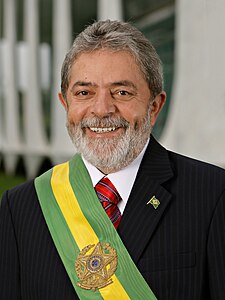
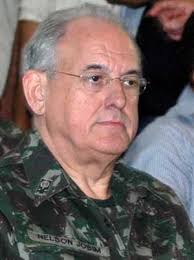
Defense Minister Nelson Jobim (left) said the government will increase the number of troops in the Amazon from 17,000 to 25,000, though he did not offer a timetable.

The report says Brazil "will develop its capacity to design and manufacture conventional and nuclear submarines" to protect its coastline, as well as recently discovered offshore oil reserves that could hold up to 55 billion barrels of oil.

"Investments will be accelerated and partnerships established to execute the nuclear submarine project," the report said.

France has promised to provide Brazil with technology to build the Scorpene diesel attack submarine, which officials hope to use to develop what would be Latin America's first nuclear-propelled sub.

Brazil's defense industry was the largest in the developing world in the mid-1980s, but it declined along with demand after the end of the Cold War.

In 1990, the country's two largest arms manufacturers, Engesa and Avibras, sought protection from creditors for debts of about US$200 million.

Brazil says any defense partnership must help the country develop its weapons industry.

"We will not simply be buyers or clients, but partners," Mangabeira said earlier this year. "Any arrangement into which we will enter must, in principle, contemplate a significant element of research and development in Brazil."

Wednesday, 17 December 2008

Arab world lauds Iraqi TV journalist' shoe-hurling at Bush


ANI - Tuesday 16th December, 2008

Baghdad, Dec.16 : The Iraqi television journalist who hurled his shoes at visiting US President George W. Bush in Baghdad on Sunday, is being feted around the Arab world for having the courage to showcase the rage in the region over a war that is still regarded as unpopular.

President Bush, on a surprise trip to Iraq and Afghanistan, got a taste of dissent at a Baghdad press event Sunday when an Iraqi journalist threw shoes at him, forcing him to duck.

In Saudi Arabia, a newspaper reported that a man had offered 10 million dollars to buy just one of what has almost certainly become the world's most famous pair of black dress shoes.

A daughter of Colonel Muammar el-Qaddafi, the Libyan leader, reportedly awarded the shoe thrower, Muntader al-Zaidi, a 29-year-old journalist, a medal of courage.

According to the New York Times, in Sadr City, people calling for an immediate American withdrawal removed their footwear and placed the shoes and sandals at the end of long poles, waving them high in the air. And in the southern Iraqi city of Najaf, people threw their shoes at a passing American convoy.

In street-corner conversations, on television and in Internet chat rooms, the subject of shoes was inescapable throughout much of the Middle East on Monday, as was the defiant act that inspired the interest: a huge and spontaneous eruption of anger at President Bush on Sunday in his final visit here.

Some deplored Zaidi's act as a breach of respect or of traditional Arab hospitality toward guests, even if they shared the sentiment.

"Although that action was not expressed in a civilized manner, it showed the Iraqi feelings, which is to object to the American occupation," said Qutaiba Rajaa, a 58-year-old physician in Samarra, a Sunni stronghold north of Baghdad.

Zaidi, who remained in custody Monday, provided a rare moment of unity in a region often at odds with itself.

In Syria, Zaidi's picture was shown all day on state television, with Syrians calling in to share their admiration for his gesture and his bravery.

In central Damascus, a huge banner hung over a street, reading, "Oh, heroic journalist, thank you so much for what you have done."

In Lebanon, reactions varied by political affiliation, but curiosity about the episode was universal. An American visitor to a school in Beirut's southern suburb, where the Shiite militant group Hezbollah is popular, was besieged with questions from teachers and students alike, who wanted to know what Americans thought about the insult.

The instantly mythic moment took place Sunday night at a news conference by President Bush and Prime Minister Nuri Kamal al-Maliki in Baghdad's Green Zone, a session meant partly to trumpet recent security gains in Iraq.

As Bush was speaking, Zaidi rose abruptly from about 12 feet away, reared his right arm and fired a shoe at the president's head while shouting in Arabic: "This is a gift from the Iraqis; this is the farewell kiss, you dog!"

Bush deftly ducked and the shoe narrowly missed him. A few seconds later, the journalist tossed his other shoe, again with great force, this time shouting, "This is from the widows, the orphans and those who were killed in Iraq!" Again, the shoe sailed over the president's head.

Zaidi was subdued by a fellow journalist and then beaten by members of the prime minister's security detail, who hauled him out of the room in his white socks. Zaidi's cries could be heard from a nearby room as the news conference continued.

A number of Iraqis said they were dismayed by what Zaidi had done.

Zaidi, who has not been formally charged, faces up to seven years in prison for committing an act of aggression against a visiting head of state.

A statement from the Maliki's government described the shoe-throwing as a "shameful, savage act that is not related to journalism in any way."

It called on Al Baghdadia, the Cairo-based satellite television network for which Zaidi works, to publicly apologize.

But as of Monday night, no apology from the network had been forthcoming.

Facebook closes down hate site


Big News Network.com
Tuesday 16th December, 2008

Internet site Facebook has shut down a web site in which a group of Serbians inserted celebratory messages on the massacre of 8,000 Muslims in Srebrenica.

After online appeals from nearly 20,000 Facebook subscribers, the company closed the site.

A Serbian group called Noz Zica Srebrenica celebrated the detention and killing of around 8,000 Muslim men and boys in Srebrenica in 1995 by Bosnian Serb forces.

A Facebook spokesman said the message content had violated Facebook terms of use.

Friday, 12 December 2008

Report says Rumsfeld allowed torture


Big News Network.com
Thursday 11th December, 2008

A US report, following a two year investigation, has declared former US Defence Secretary Donald Rumsfeld and other US officials allowed the use of torture on foreign detainees.

The report says Rumsfeld "redefined the law" to allow the abuse of detainees in US custody.

The authors of the report, Senator Carl Levin, chairman of the Armed Services Committee, and Senator John McCain, said the abuse could not simply be attributed to the actions of “a few bad apples” acting on their own.

They said: "The fact is that senior officials in the United States government solicited information on how to use aggressive techniques, redefined the law to create the appearance of their legality, and authorized their use against detainees."

Even though the Bush administration had suggested that the use of torture techniques came from interrogators who had requested tougher methods for al-Qaeda and Taliban members, the report concluded that the use of torture originated from a February 2007 memo from President Bush that said the Geneva Convention did not apply to non-government fighters.

China considers sending navy to disperse pirates


Big News Network.com
Friday 12th December, 2008

The Chinese navy may be sent to the Gulf of Aden to carry out an offensive against Somali pirates.

China is currently deciding whether to send its navy to fight piracy off the coast of Somalia, after two of its vessels were captured last month.

Chinese national defence experts have been discussing the possibility with foreign affairs diplomats following the most recent seizure of a Hong Kong-flag ship with a 25-member crew.

The China Daily has reported the diplomats feel the government should use caution and only go to the Gulf of Aden region within U.N. rules.

The United Nations has adopted three resolutions since July asking the international community to respond to the piracy problem off Somalia.

Sunday, 30 November 2008

Terrorists posed as Malaysian students

[In this Wednesday, Nov. 26, 2008, file photo, a gunman walks at the Chatrapathi Sivaji Terminal railway station in Mumbai, India. Teams of gunmen stormed luxury hotels, a popular restaurant, hospitals and a crowded train station in coordinated attacks across India's financial capital,taking Westerners hostage and leaving parts of the city under siege. - AP pic]

MUMBAI, Nov 30 - A sensational revelation has emerged from a terrorist caught alive by Indian troops: The attack on Mumbai's top hotels was meant to be India's Sept 11.

Azam Amir Kasav - some reports have his name as Ajmal Amir Kasab - confessed that part of the plot called for him and his fellow terrorists to carry out a replay of the destruction of Islamabad's Marriott Hotel, in targeting Mumbai's Taj Mahal Hotel.

The Marriott was blown up by militants in September, an attack that killed more than 50 people.

According to a report in The Times of India, Azam said the attacks on the Taj and The Oberoi Trident were aimed to create a "Sept 11 in India", a reference to the coordinated attacks by Al-Qaeda on the United States in 2001. They involved the crashing of hijacked planes into the Twin Towers in New York and the Pentagon that left nearly 3,000 people dead.

The confessions of the clean-shaven, fluent English-speaking 21-year-old Pakistani have given investigators a clearer picture of what had happened last Wednesday.

Azam said he was member of the Lashkar-e-Taiba, but the Kashmir- based Pakistani militant group has denied any role in the attacks.

Founded as a guerilla group to fight the Indian army in Kashmir, the group was banned by the Pakistani government after the Sept 11, 2001 attacks, but reportedly continues to enjoy the backing of some Pakistani politicians and security officials.

A native of Faridkot in Pakistan- occupied Kashmir, Azam revealed the names of his fellow terrorists, all Pakistani citizens: Abu Ali, Fahad, Omar, Shoaib, Umer, Abu Akasha, Ismail, Abdul Rahman (Bara) and Abdul Rahman (Chhota).

But the 10 men were apparently not the only ones directly involved: Another group, he claimed, had checked themselves into hotels four days before, waiting with weapons and ammunition they had stockpiled in the rooms.

The 10 men in Azam's group were chosen well: All were trained in marine warfare and had undergone a special course conducted by the Lashkar-e-Taiba. Preparations were also detailed, and started early.

Azam and eight others in the team made a reconnaissance trip to Mumbai several months before the attacks, pretending to be Malaysian students. They rented an apartment at Colaba market, near one of their targets, the Nariman House.

The chief planner of the attacks also visited Mumbai a month before to take photographs and film strategic locations, including the hotel layouts.

Returning to Pakistan, the chief plotter trained the group, telling them to 'kill till the last breath'.

Surprisingly, the men did not expect themselves to be suicide terrorists. Azam said they had originally planned to sail back on Thursday - the recruiters had even charted out a return route, stored on a GPS device.

On the evening of Nov 21, Azam's group set off from an isolated creek in Karachi in a boat. The next day, a large Pakistani vessel with four Pakistanis and crew picked them up, whereupon the group was issued arms and ammunition.

Each man in the assault team was handed six to seven magazines of 50 bullets each, eight hand grenades, one AK-47 assault rifle, an automatic loading revolver, credit cards and a supply of dried fruit. They were, as some media put it, in for the long haul.

A day later, the team came across an Indian-owned trawler, Kuber, which they boarded. They killed four of the fishermen onboard, dumped their bodies into the sea, and forced its skipper Amarjit Singh to sail for India.

The next day, they beheaded the skipper, and one of the gunmen, a trained sailor, took the wheel and headed for the shores of Gujarat, India.

Near Gujarat, the terrorists raised a white flag as two officers of the coast guard approached.

While the officers questioned them, one of the terrorists grappled with one of them, slit his throat and threw his body into the boat. The group then ordered the other officer to help them get to Mumbai.

On Nov 26, the team reached the Mumbai coast.

Four nautical miles out, they were met by three inflatable speedboats. They killed the other coast guard officer, transferred into the speedboats and proceeded to Colaba jetty as dusk settled.

The Kuber was found later with the body of the 30-year-old captain onboard.

At Badhwar Park in Cuffe Parade - just three blocks away from Nariman House - the 10 men got off, stripped off the orange windbreakers they had been wearing and made sure to take out their large, heavy backpacks.

It was there that they were spotted by fisherman Prasan Dhanur, who was preparing his boat, and harbour official Kashinath Patil, 72, who was on duty nearby.

"Where are you going?" Patil asked them. "What's in your bags?"

The men replied: "We don't want any attention. Don't bother us."

Thinking little of it, Dhanur and Patil, who said they did not see the guns hidden in the backpacks, did not call the police, and watched the 10 young men walk away.

Then the carnage started.

On hitting the ground, the 10 men broke up.

Four men headed for the Taj Mahal Hotel, two for The Oberoi Trident, two for Nariman House and two - Azam and Ismail - for the Chhatrapati Shivaji Terminus by taxi.

At the railway station, Azam and his colleague opened fire, targeting Caucasian tourists while trying to spare Muslims.

The two gunmen also destroyed the CCTV control room, throwing grenades into it.

It was here that Azam was photographed, dressed in light-grey combat trousers and sneakers, a rucksack on his back, toting his AK-47.

According to one security expert, the way he carried the assault rifle revealed months of training.

The two men left the main hall of the railway station littered with bodies and pools of blood, then moved on to Metro Cinema and then to the Girgaum Chowpatty area in a stolen Skoda.

It was there that their plans started to unravel.

At the Girgaum Chowpatty area, Azam and Ismail were intercepted by anti-terror troops from the Gamdevi police station, and they ended up trading shots.

Azam managed to shoot dead assistant police inspector Tukaram Umbale, while one of them also gunned down anti-terror squad chief Hemant Karkare.

Ismail, however, was eventually killed, while Azam himself was shot in the hand. Pretending to be dead, he fell, and the two men were taken to Nair Hospital.

But police soon spotted him breathing and quickly evacuated the hospital's casualty ward, and brought in the anti-terror squad to interrogate him.

At first, Azam remained tight-lipped, but the sight of Ismail's mutilated body broke his resolve.

Pleading with medical staff to save his life, he said: "I do not want to die. Please put me on saline."

The bullet in his hand was removed, and after his condition had stabilised, Azam was moved to another location on Thursday for more interrogation.

Reports, however, say that the grilling at the hospital had been so intense that at one point, he pleaded with the police and medical staff to kill him.

He said: "Now, I don't want to live." - The Straits Times

Saturday, 29 November 2008

Jihadi Terror in Mumbai


Written by Anand Kumar
Friday, 28 November 2008


Driving a further wedge between India and Pakistan

The 25-odd attackers who strew death, terror and chaos in India’s financial capital of Mumbai Wednesday are believed to have been dropped onto speedboats from ships in the Arabian Sea, officials say, going after Americans, Britons and Jews. The attackers, identified as Pakistanis, are either an Al Qaeda-allied group, officials say, or sent by Pakistan’s notorious Directorate for Inter-Services Intelligence, or ISI.

As a weapon to kill any possible rapprochement between Indian and Pakistan, the attackers, whoever they were, couldn't have done much better. In addition, the attacks seem almost certain to fuel the already distressing rise of communalism in India and make the country's 150-odd million Muslims a target. (See Asia Sentinel: Nov. 11, The Rise of India's Saffro-Nazis)

An Indian soldier runs to take cover in front of the Taj Mahal hotel as Indian troops and militants battle in Mumbai, India, yesterday. Teams of gunmen stormed luxury hotels, a popular restaurant, hospitals and a crowded train station in coordinated attacks across India's financial capital, taking Westerners hostage and leaving parts of the city under siege. - AP pic

Indian commandoes Friday were scouring three luxury hotels room by room Friday in the aftermath of attacks that have left more than 125 people dead and nearly 350 injured, including almost all the top leaders of the Mumbai Anti-Terrorism Squad (ATS). Among the dead is ATS Chief Hemant Karkare.

Video footage captured by CCTV cameras indicates that all the attackers, clad in T-shirts and khakis, were highly trained and were heavily armed. So far 10 have been killed, with one taken alive. The arrested terrorist has been traced to Faridpur in Pakistan. One of the three speedboats seized by police was heavily laden with explosives.

After reaching Colaba fishing harbor, the attackers scattered in small groups and moved towards different targets. They targeted the city’s three prominent hotels, hospital, railway station and most importantly Nariman House, an office building that houses a Jewish center. Though the terrorists were indiscriminate in their killing, in Hotel Taj Mahal, (photo right) one of Mumbai’s most famous landmarks, they asked for British and American passport holders.

A hitherto unheard-of group calling itself "Deccan Mujahedeen" took responsibility for the attack, which is dramatically different from the anonymous bombings of the past. Previously bombs were surreptitiously planted in different localities, with attackers choosing softer targets and unsuspecting victims. But this time the attackers, armed to the teeth, were essentially on a suicide mission. The operation involved a large number of gunmen and was carefully and professionally planned. Officials said the attackers were familiar with the layout of all of the hotels and other buildings they invaded.

The attack served many objectives, creating terror in the country as well as heightening the tension between India and Pakistan and if possible creating war hysteria. They also wanted to take revenge on Britain and the United States, the main players in the War on Terror, by taking their citizens hostage or by killing them.

Although the detention of two ships in the Arabian Sea gives further credence to the involvement of Pakistan, along with the satellite phones captured from the attackers, it is possible that the Pakistani government may not be directly involved. Pakistani President Asif Ali Zardari earlier this week offered an olive branch to India, seeking to decrease tensions between the two countries.

In separate messages, Zardari and Prime Minister Yousaf Raza Gilani deplored the Mumbai attacks although Pakistan’s condemnation has started looking hollow as more and more evidence pointing towards that country’s involvement although the jihadi groups and Pakistan’s notorious Director for Inter-Services Intelligence, or ISI are almost outside its control. These attacks have managed to embarrass the Pakistan foreign minister Shah Mehmood Qureshi who was in India to "build bridges."

Certainly, the attacks could not have come at a worse time for the Manmohan Singh-led government, which already is facing severe criticism for its weak handling of terror. Indians both at home and abroad are outraged. The attacks are being termed India’s 9/11 and the government is under severe pressure for a response.

Speculation on the motive and source of the attacks varies. Indian officials have a tendency to blame the ISI for any attack that takes place on Indian soil. That doesn’t mean, however, that they didn’t have something to do with this one. The attacks took place immediately after the agency’s political wing was ordered disbanded by Zardari. US officials have been pressuring Pakistan to do something about the powerful spy agency since they concluded that the ISI was involved in a July 7 bombing of India’s embassy in Kabul.

Indian officials say the ISI might have hoped the attack would destabilize the civilian government in Pakistan and give the organization a chance to regain lost ground. Others say the restrictions placed on the ISI are hardly effective and in an earlier case when the government tried to bring the agency under the Interior Ministry the decision was almost immediately reversed.

It is also suggested that al-Qaeda or allied groups might be involved in a bid to do something spectacular to boost sagging morale after the organization lost some of its top leaders in recent US attacks. Another possibility is that successful elections in Kashmir, where voter turnout has been nearly 65 percent might have made the jihadi forces.These attacks might also have been launched with the objective of sabotaging the ongoing election process in several Indian states.

Whatever the motive, the Mumbai attacks are likely to have serious implications for India, affecting the trade and business environment. They forced closure of the country’s stock and commodity exchanges and drove up its risk premium in international credit markets. Foreign investors have already withdrawn about US$13.5 billion from the Indian stock market this year. Coming at a time, when foreign investors have been selling Indian assets, the attacks raised fears of a steeper fall in the rupee and a further blow to market confidence.

Clearly it will be negative for the sentiment at a time when the world is already looking to be highly uncertain in terms of growth prospects. The global recession is likely to bring down India’s annual gross domestic product growth rate to 7.5 percent. The attacks may well worsen the situation, particularly affecting tourism as the terrorists have attacked three major and very popular hotels of Mumbai.

India’s Commerce minister, Kamal Nath says that there is no economic component to these attacks. But the business community is far from convinced. The attacks have rattled the business community, which is now demanding tougher laws along with "stronger and firmer" leadership to tackle terrorism. Industry leaders, including heads of the apex chambers, feel the country needs to be on a high alert since their institutions are becoming vulnerable.

Though Mumbai has bounced back after earlier attacks the industry leaders are of the view that the latest attacks are different from the earlier ones and the city might take time to adjust.

Monday, 24 November 2008

Police practising selective persecution: Malaysian Bar


By Elizabeth Looi
elizabethlooi@thenutgraph.com
24 Nov 08 : 8.02PM

PETALING JAYA, 24 Nov 2008: The police acted unjustly when they detained one group for illegally gathering in public but did not arrest another, said the Malaysian Bar.

Bar president Datuk Ambiga Sreenevasan said both groups were exercising their right to freedom of assembly as enshrined in the Federal Constitution.

One assembly was held to protest against the Internal Security Act (ISA), while the other, which apparently marched from Wisma Sejarah to the Tun Razak police station in Kuala Lumpur, was to support the act.

"However, only one group was targeted, namely the anti-ISA group. We are alarmed that nine people from the group were arrested.

"The use of police force against only one group is selected persecution," Ambiga said in a statement.

She was commenting on the arrests of nine people at the gathering of the Abolish ISA Coalition (GMI) on 23 Nov in Ampang. Among those arrested included PAS vice-president Mohammad Sabu.

Ambiga called on the authorities to even-handedly protect and uphold the rights of all citizens to assemble peacefully to express their opinions.

DAP Member of Parliament for Klang Charles Santiago also said the police had practised double standards when they stood guard for the 500 people who demonstrated on 23 Nov to support the use of the ISA.

"While the police are quick to arrest opposition politicians, human rights workers, and members of the civil society [who take part in demonstrations], they act as protectors during street protests organised by ruling parties and groups which support the government.

"This is blatant double standard," he said in a statement.

Santiago added that the arrests reflect the highhandedness of the police force, abuse of power, and non-tolerance of dissent by the government.

He also called on the police to stop attacking members of the media as he was told that they were shoved and shouted at during the ISA gathering in Ampang.

Monday, 17 November 2008

Shuttle Endeavour links with space station


By MARCIA DUNN – 2 hours ago

CAPE CANAVERAL, Fla. (AP) — Space shuttle Endeavour linked with the international space station on Sunday, kicking off a huge home makeover that will allow twice as many astronauts to live up there beginning next year.

In this photo (left) released by NASA, Astronaut Steve Bowen, STS-126 mission specialist, prepares to use a camera on the middeck of Space Shuttle Endeavour during post launch activities on Friday Nov. 14, 2008. (AP Photo/NASA)

Commander Christopher Ferguson guided the shuttle to a smooth docking as the two spacecraft soared 212 miles above India. His ship's radar worked just fine, despite earlier trouble with the antenna.

Image above: The STS-126 and Expedition 18 crews greet each other.
Photo credit: NASA TV


"We understand that this house is in need of an extreme makeover and that you're the crew to do it," the space station's skipper, Mike Fincke, said as he welcomed the seven shuttle astronauts aboard.

In this photo (left) released by NASA, astronaut Chris Ferguson, STS-126 commander is seen in the commander's station on the flight deck of Space Shuttle Endeavour during post launch activities on Friday Nov. 14, 2008. (AP Photo/NASA)

His crewmate, Gregory Chamitoff, was especially excited to see Endeavour. He's been living on the space station for almost six months, and the shuttle is his ride home.

"Wow," Chamitoff exclaimed. "You look beautiful ... I am smiling from ear to ear."

Earlier in the afternoon, before Endeavour began its final approach from eight miles out, Fincke and his crew captured striking video of it and the moon, which was also prominent in many of the launch-night photos.

"It's a big day here today," Fincke said.

Once Endeavour closed to within several hundred feet, Ferguson guided it through a 360-degree backflip so Fincke and Chamitoff could take zoom-in photos of all its thermal shielding. About 200 digital images will help NASA determine whether Endeavour sustained any damage during liftoff Friday night. Fincke said he noticed nothing amiss.

In this photo (left) released by NASA shows Astronaut Eric Boe, STS-126 pilot, gives a thumbs up as he sits in the pilot's station on the flight deck of Space Shuttle Endeavour during post launch activities on Friday Nov. 14, 2008. The first-time space traveler has been flying for the Air Force since the late 1980s, (AP Photo/NASA)

Only one piece of debris has been spotted so far in launch pictures. It was probably ice and did not strike Endeavour, said LeRoy Cain, chairman of the mission management team. Flight controllers initially thought it might be one of the shuttle's thermal blankets.

NASA officials were delighted with how everything was going.

"The team down here on the Planet Earth wanted to compliment you on a well-done, very nicely done rendezvous and docking," Mission Control radioed up.

The first priority for the 10 astronauts was a crew member swap.

Astronaut Sandra Magnus moved into the space station for a 3 1/2-month stay, replacing Chamitoff. The two greeted each other with a bear hug. "Welcome to your new home," Fincke told her.

As soon as everyone embraced, Fincke declared: "On to work. Man, this place just got smaller."

Besides Magnus, Endeavour was delivering thousands of pounds of home improvement gear: an extra bathroom, kitchenette and exercise machine, two more sleeping compartments, and a fancy new recycling system for converting urine and condensation into drinking water.

In this photo (left) released by NASA, astronauts Shane Kimbrough, right, and Sandra Magnus, both STS-126 mission specialists, work with their shuttle launch and entry suits on the middeck of Space Shuttle Endeavour during post launch activities on Friday Nov. 14, 2008. (AP Photo/NASA)

NASA cannot double the size of the space station crew — currently at three — until all the new equipment is installed, checked out and working properly. The goal is to have six people living permanently on the orbiting outpost by June.

Most of the new stuff is inside a giant cylinder that Endeavour's astronauts will attach to the space station on Monday.

Endeavour and its crew will spend almost two weeks at the space station, a little longer than usual. Four spacewalks will be carried out beginning Tuesday, primarily to clean and lubricate a solar wing-rotating joint that broke down more than a year ago. It's clogged with metal shavings from grinding parts.

Thursday, 16 October 2008

Parliament: Cops scared of crooks, so base closed!


By ROYCE CHEAH

KUALA LUMPUR: A police beat base in the Chow Kit area of downtown Kuala Lumpur was closed down because it was in a location that was considered unsafe, said Home Minister Datuk Seri Syed Hamid Albar.

In a written reply to Dr Lo’ Lo’ Mohamad Ghazali (PAS-Titiwangsa), Syed Hamid said the beat base was located in a dirty area where there was a possibility of being exposed to contagious diseases.

The presence of criminals also posed a threat to the safety of police officers, he said.

Lo’ Lo’ had asked why the beat base on Jalan Haji Taib was closed considering the high number of vice-related activities in the area, as well as what kind action had been taken by the police to curb such activities.

Syed Hamid said that the police were looking for a new location to build a police beat base that would be able to give “guaranteed and continued service to the public.”

Lo’ Lo’s was the 30th question in the Order Paper and hence did not get a mention in the House during the daily one-hour Question Time. However, Dr Mohd Hatta Ramli (PAS-Kuala Krai) managed to raise it when he interjected during Azmin Ali’s (PKR-Gombak) speech during the debate on Budget 2009.

Dr Mohd Hatta said that if the police themselves felt unsafe in a beat base, then it would be even worse for the public.

“The minister has to resign if he is worried about the safety of police in that area. Maybe it would be better to put the beat base in army barracks,” he said.

Dr Mohd Hatta then managed to raise the issue again during his own debate on Budget 2009 saying that Syed Hamid’s response was not rational.

“The police are there to make a place safe. If they themselves are scared and run away, then how can we hope for others to want to be there?

“It is embarassing and that is why the criminals will always be there,” he said.

Dr Mohd Hatta said if the place is dirty, then it is up to the police to organise gotong-royong activities to clean it up or if they did not want to then they should move to Putrajaya or Parliament.

“And what is this about contagious diseases on Jalan Haji Taib? The only kind of contagious diseases that are present there are sexually-transmitted ones.

“Is the minister scared that his charges will contract such diseases? That kind of thing is a matter of choice. In any case, if this is what he is worried about then we are worried that the police are not above this.”

Dr Mohd Hatta added that the police had to be brave people and that they were a different breed altogether when facing demonstrators. He said he hoped that the minister would clarify his written answer in the House as this is not the kind of police that the people want.

Friday, 10 October 2008

What Happens In Heaven

This is one of the nicest e-mails I have seen and is so true:

I dreamt that I went to Heaven and an angel was showing me around. We walked side-by-side inside a large workroom filled with angels. My angel guide stopped in front of the first section and said, 'This is the Receiving Section. Here, all petitions to God said in prayer are received.'

I looked around in this area, and it was terribly busy with so many angels sorting out petitions written on voluminous paper sheets and scraps from people all over the world.

Then we moved on down a long corridor until we reached the second section.

The angel then said to me, 'This is the Packaging and Delivery Section. Here, the graces and blessings the people asked for are processed and delivered to the living persons who asked for them.' I noticed again how busy it was there. There were many angels working hard at that station, since so many blessings had been requested and were being packaged for delivery to Earth.

Finally at the farthest end of the long corridor we stopped at the door of a very small station. To my great surprise, only one angel was seated there, idly doing nothing. 'This is the Acknowledgment Section,' my angel friend quietly admitted to me. He seemed embarrassed 'How is it that there is no work going on here?' I asked.

'So sad,' the angel sighed. 'After people receive the blessings that they asked for, very few send back acknowledgments.'

'How does one acknowledge God's blessings?' I asked.

'Simple,' the angel answered. Just say, 'Thank you, Lord.'

'What blessings should they acknowledge?' I asked.

'If you have food in the refrigerator, clothes on your back, a roof overhead and a place to sleep you are richer than 75% of this world. If you have money in the bank, in your wallet, and spare change in a dish, you are among the top 8% of the world's wealthy .'

'And if you get this on your own computer, you are part of the 1% in the world who has that opportunity.'

'If you woke up this morning with more health than illness ... you are more blessed than the many who will not even survive this day.'

'If you have never experienced the fear in battle, the loneliness of imprisonment, the agony of torture, or the pangs of starvation ... you are ahead of 700 million people in the world.'

'If you can attend a church without the fear of harassment, arrest, torture or death you are envied by, and more blessed than three billion people in the world.'

'If your parents are still alive and still married...you are very rare.'

'If you can hold your head up and smile, you are not the norm, you're unique to all those in doubt and despair.'

Ok, what now? How can I start?

If you can read this message, you just received a double blessing in that someone was thinking of you as very special and you are more blessed than over two billion people in the world who cannot read at all.

Have a good day, count your blessings, and if you want, pass this along to remind everyone else how blessed we all are.

ATTN: Acknowledgement Dept.:

'Thank you Lord, for giving me all those blessings, the ability to share this message and for giving me so many wonderful people to share it with.'

I thank God for everything, especially all my family and friends!

Thursday, 25 September 2008

No escape from this Malaysian Alcatraz

A Singaporean's insight to the Kamunting detention camp
A blog in straitstimes.com.

SEPT 25 - In May 2004, I was among a group of some 30 journalists allowed into the dreaded Kamunting detention camp in remote Perak. Kamunting is a high-security prison where Internal Security Act (ISA) detainees - who can be imprisoned without trial - are often held.

In Malaysia, the terms ISA and Kamunting go together. If you are arrested under the ISA, you are often first brought to Bukit Aman (ironically, Hill of Peace in Malay) headquarters of the federal police, or the Police Remand Centre for interrogation, and then onwards to Kamunting.

The latest to hit the news with his transfer from Bukit Aman to Kamunting is blogger Raja Petra Kamaruddin. He sadly joined the five leaders of the Hindu Rights Action Force (Hindraf) who have been detained there since December last year.

That 2004 visit was the first, and only time since, that journalists were allowed into the camp to see its living conditions. It was part of Prime Minister Abdullah Badawi's liberalisation policy - he had just won big-time in the March 2004 (yes, March 2004, not 2008) general elections and the government was full of confidence and promise. It had won 90 per cent of seats in Parliament - a record.
The visit was hosted by then-Deputy Home Minister Noh Omar who wanted to show journalists that the government had nothing to hide, despite the noise made then by the opposition, rights groups and families of the detainees that horrible things are happening inside.

I shivered as I looked around this Malaysian Alcatraz, with its trimmed lawns. This was a place where Clint Eastwood could escape from. The 114ha camp (about 140 football fields) had double security checks before anyone is allowed in or out. And if one could cut through one set of fence, there is another layer of fence to deal with.

Even if one could find wire cutters, and then be given the time to cut through the fences, there were all the dogs, lights and guards on watch towers to stop any escape attempt. Beyond the fences were just wide stretches of open fields. I don't remember anyone ever escaping from the prison.

The place reminded me of the song Hotel California - you can check out anytime you like, but you can never leave. Unless the government wants you to.

According to details published by rights group Aliran in Penang on Sept 19, the big camp has 64 detainees now. Raja Petra makes it 65. Except when they were put in solitary confinement, the detainees I saw were placed in single-storey barracks that they share with others.

There was no privacy, really, and there must have been worries among inmates about saying the wrong things to another person that could prolong one's stay in the dreaded camp.

You see, although people like Raja Petra have been given a two-year sentence, the government after seeing recommendations from a review board, could in theory extend the incarceration for a very long time.

According to Penang-based rights non-governmental organisation Aliran, the longest prisoners now inside Kamunting - businessmen Yazid Sufaat and Suhaimi Mokhtar - have been there for nearly seven years.

Both were detained for alleged links to the Jemaah Islamiyah terror group since December 2001. In that camp in 2004, we were taken to meet two groups of people, separately, from two of the barracks. Noh's aides had told the reporters - you are only observers.

"You can watch the deputy minister talk to the detainees, but if you try to talk to any of them, you would be thrown out right away. And please, do not tape any of the conversation." We had to leave our tape recorders and mobile phones at the front counter.

Credit had to be given to Datuk Noh on that day, because although he was civil to the detainees, he was bombarded with questions on why they were still inside, their worries about their families, and their many claims of innocence.

A couple of the detainees cried spontaneously when talking about the plight of their families outside. Many of the inmates then were being detained due to alleged links to the JI, while others were alleged gangsters from the Borneo states.

One of the detainees, seeing the reporters, accused the deputy minister of using the visit to "seek political mileage".

"Don't use us as political tools and visit us as if we are animals in the zoo," he said.

There were no famous faces inside then, except for Nik Abduh Nik Aziz, a son of the Parti Islam SeMalaysia spiritual leader, Nik Aziz Nik Mat. He was held due to alleged links with JI, and did not say anything at all. Nik Abduh has since been released.

As for Raja Petra, he is not the most famous person to have passed through those infamous gates. Those gates are the only ones that the public can see on a drive there, unless he or she is allowed inside to see a family member. And even inside, unlike the journalists in 2004, most family members are restricted to a meeting area.

In Malaysia, being jailed under the ISA has, rightly or wrongly, come be to taken as a badge of honour. It is as if the time spent under detention shows that 'My struggle was so intense that to stop me, the government had to put me behind bars without trial'.

Among those who have been detained under the ISA are opposition veterans Lim Kit Siang and Karpal Singh, Parti Keadilan Rakyat chiefs Anwar Ibrahim and Azmin Ali, PAS vice president Mohamed Sabu, former deputy minister Ibrahim Ali, current defacto Islamic Affairs Minister Zahim Hamidi, rights campaigner Irene Xavier and academic Chandra Muzaffar.

The list is far from comprehensive as it includes lawyers, Chinese educationists, social activists and yet more politicians. A group of ex-inmates are fighting to get the ISA laws totally dropped. They are known by their Malay acronym GAM, or Gerakan Mansukan ISA (Abolish ISA Movement).

After the arrests of Raja Petra, opposition MP Teresa Kok and Sin Chew Daily journalist Tan Hoon Cheng, rights groups and NGOs have again banded together to the ISA repealed. It is not clear what will happen next, but most of those released from the camp were not cowed, but became fierce fighters against the security laws. - Reme Ahmad

Saturday, 20 September 2008

Heroes in blue: Nuing sacrificed his life to save comrades


By : FADHAL A. GHANI

Imbok Jimbon showing her husband’s Seri Pahlawan Gagah Perkasa award.

True friendship and protecting the nation and his comrades were Constable Nuing Saling's priorities in life, so much so that he died doing just that, even though he was on leave at the time. FADHAL A. GHANI speaks to his widow.

IMBOK Jimbon was enjoying having her husband at home. (RIGHT: Constable Nuing Saling and the NST report on April 7, 1975.)

She was six months pregnant with their third child and her husband, Constable Nuing Saling, was into his second week of leave from the police field force (PFF -- now General Operations Force).

Then Nuing told her he would be joining his best friend Superintendent Johnny Mustapa on an operation in the jungles near Sibu.

Imbok was worried. A feeling of dread came over her. "I had a feeling that this would be my husband's most dangerous mission. I reminded him that he was on leave and we were due to go back to my hometown, Kampung Sungai Banyok, in Sibu, in two days' time," said Imbok recently.

But Nuing was insistent. He told her that protecting the nation was his duty and a very important one at that.

Plus, he added, he and Johnny had an agreement that they would help each other out in all missions.

The night before Nuing left, Imbok had a dream that a well-dressed policeman who identified himself as Sergeant Intai visited her and presented her with a gold stick.

It would take her more than a year to understand the meaning of her dream, when Nuing was posthumously awarded the country's highest award for valour.

"It was only when he was awarded the Seri Pahlawan Gagah Perkasa (SP) did I understand my dream. He was destined to be a hero of the nation," said Imbok.

Nuing was awarded the SP on June 2, 1976, more than a year after the operation where he, Johnny and one other member of the 15th Battalion of the PFF lost their lives.

The trio of Sarawakians were among 16 PFF members who were on patrol when they were involved in a firefight with a group of 14 communist terrorists at 10pm on April 5, 1975.

When that battle ended, with no one killed, the policemen continued their patrol. They had another battle with communists at 3am the following day.

In both battles, none of the policemen were wounded, but blood trails indicated that several of the communists had at least been wounded.

At 6.30am, however, the patrol stumbled onto a terrorist fort near Sungai Setabau. They were in an open field when they were ambushed by the communists in their fort.

As the shooting continued, Johnny and most of his men managed to get to cover, but Nuing and Constable Abang Masri were unable to do so. All they could do was lie as flat as possible and use the ground for what little cover it afforded from the communists barely 100m away.

Seeing his best friend and another member of his group pinned down, Johnny ordered his men to attack the communists' fort.

Nuing and Abang joined in as the group began to fire and move toward the fort.

Abang, however, was stopped not far from where he had been pinned down, killed by several bullets.

His teammates later said Nuing became enraged by Abang's death, running toward the enemy while firing his weapon.

A shotgun blast hit him in the face, causing him to fall, but even that did not stop Nuing. With blood streaming out of his wounds, he continued to attack, killing and wounding several communists.

But just as he was about to reach the fort, he was hit several more times and killed instantly.

The battle continued for several more minutes, during which Johnny was also killed. The remainder of the patrol, however, eventually seized the enemy fort, although the communists who were not dead managed to escape.

The three cops were buried with full police honours in Kuching.

At the time of his death, Nuing was 32. He had a daughter aged 8 and a son aged 3. Three months' later, Imbok gave birth to the couple's second daughter.

Born in Sungai Bungam, Mata Igan, Sarawak in 1943, Nuing joined the force on Feb 5, 1963.

Sunday, 7 September 2008

Massive churches are rising in Muslim Indonesia

The Wall Street Journal Asia
JAKARTA, Sept 5 — Indonesia's sprinkling of small churches have periodically been raided, burned down or bombed by angry mobs. It would seem to be a good place for Christians to keep a low profile.

Instead, some wealthy Christian leaders in the predominantly Muslim nation have embarked on a bold and possibly provocative strategy: building megachurches as an assertion of their faith.

At least four multimillion-dollar churches that can seat thousands of people — patterned on the evangelical colossi of the US — are nearing completion around Jakarta, the capital, and others are cropping up elsewhere.

The striking edifices are one way Christians — who make up about 8 per cent of Indonesia's population of 230 million — are dealing with what some say is a rise in anti-Christian sentiment in Asia. They are an emblem of how the church here, financed by prominent businesspeople, is determined to make its presence known after a decade of persecution.

During the Asian financial crisis of the late 1990s, Indonesia's ethnic Chinese, who make up a large portion of Jakarta's Christians, were targeted in race riots. Denied permits by the government to build places of worship, congregations have met instead behind closed doors in malls and five-star hotels. Today, the government still blocks many requests to construct churches, fearing a backlash from extremist Muslim groups, and mobs still regularly attack churches.

But Christians say the decision to allow the massive churches signals a step forward and a reinforcement of Indonesia's secular constitution.

Indonesia's Religious Affairs Ministry declined to make the official who is qualified to respond on church permits available for an interview. In general, Jakarta prefers not to comment on the sensitive subject of religion.

The government appears to be allowing the megachurches at a time when organised Islamic terrorism has diminished as a threat to the nation.

Terrorists linked to al Qaeda, who bombed a string of Jakarta churches on Christmas Eve in 2000 and carried out the Bali nightclub attacks in 2002, have been greatly weakened by arrests under the leadership of President Susilo Bambang Yudhoyono and haven't carried out a major assault on Western or Christian targets for three years. The megachurches, which have their own security, may yet offer a target to determined terrorists, but times have changed.

The lull in organised terror has, in turn, emboldened Jakarta's elite churches to put up the gleaming structures. Thanks to Indonesia's booming economy, rich ethnic-Chinese businesspeople can fund the projects.

In Kemayoran, a business district of high-rise offices near the city centre, the Reformed Millennium Cathedral is set to open officially on Sept 20. It will seat 8,000 and house a seminary, a university and a museum of Chinese porcelain.

Preacher Stephen Tong, a 69-year-old Chinese-born Indonesian, founded the Indonesian Reformed Evangelical Church in 1989 and says it took 16 years to persuade the central government to issue a permit to build the new church. In that time, hundreds of churches have been burned down by hardliners across Indonesia, he estimates.

"I've built a bigger one" than all the destroyed churches combined, says Tong, who used to hold his church's meetings in a hotel. "I want it to be an image that Indonesia still has freedom of religion."

Tong acknowledges persistent problems, and Christians complain that in day-to-day life, Yudhoyono, who faces re-election next year, has generally been slow to defend religious minorities. The police often turn a blind eye to Islamist violence against churches without security in poor parts of Jakarta and rural Indonesia.

In July, hundreds of Christian theology students were driven from their campus in east Jakarta after a group reportedly angered by the singing of hymns, considered an evangelical activity, attacked them with Molotov cocktails and spears, injuring scores of them. Police have taken no action. "We should remain faithful to the constitution," Tong says.

The population of Christians in Asia and the Middle East grew to 350 million in 2005, or 9 per cent, from about 100 million in 1970, or 5 per cent of the total population, according to a 2006 study on Asian Christianity by the Pew Forum on Religion and Public Life, a project of the Pew Research Centre.

Many Indian states have passed laws making it harder to change religions. In Malaysia, powerful Islamic courts have increasingly blocked Muslims from converting. China's Communist government has suppressed a number of Pentecostal churches that were winning converts. Buddhists in Myanmar have accused evangelical Protestant movements of undertaking aggressive proselytisation campaigns.

Attacks on Christians are increasingly common in Asia. In the Indian state of Orissa, for instance, at least a dozen Christians have been killed by Hindu mobs following the recent death of a Hindu leader who Christians say was killed by Maoist rebels. Following the attacks, Vatican officials said they were concerned about growing "Christianophobia" in Asia.

Now, churches are starting to push back. A coalition of churches in Malaysia urged voters ahead of the general election in March to choose parties that protect freedom of religion. Christians in South Korea, home to some of the world's largest Protestant megachurches, are exporting their message to places like Cambodia, which is mainly Buddhist. South Korean missionaries are also targeting China, where worshippers may attend only state-sanctioned churches, forcing many more underground.

The megachurches in Indonesia — where local Christians largely refrain from proselytising — are another sign of the pushback. Tong says local-government officials recently asked him to remove a large cross from atop his new church. He refused.

Still, to avoid unwanted conflict, the new megachurches take precautions. Most are built either in commercial districts or in Christian parts of town.

Tong, who also holds services in Mandarin each week in Singapore, Taiwan and Hong Kong, has a wide network to draw on. His new church in Jakarta, which cost US$27 million (RM91 million) for the main auditorium alone, was partly funded by James Riady of Indonesia's Lippo Group.. Riady, who paid a huge fine for illegal contributions to former US PresidentBill Clinton's 1996 election campaign, says the megachurch phenomenon is an attempt to redress the balance after years of denying communities the right to build churches.

In Kelapa Gading, a suburb of Jakarta where many residents are Christians, workers are putting the finishing touches on a megachurch that has cost US$8 million to build and will seat 10,000 people and include two indoor waterfalls. Its senior pastor, the Rev. Yacob Nahuway, is from Ambon in eastern Indonesia, where thousands died in Muslim-Christian fighting earlier this decade before a ceasefire was reached. Refugees from Ambon are working at the site.

Construction sometimes goes ahead without a permit. Just off a major toll road in Sentul, a town about 45 minutes outside Jakarta, a stadium-like building owned by the GBI Bethany Church is set to open later this year. Unable to get a permit, the church has to call it a convention centre. Local officials "know the building will be used for a church," says a construction manager who attends the church. "But they close their eyes." — The Wall Street Journal Asia

Tuesday, 29 July 2008

Is he just plain Kanang Langkau?

The Borneo Post Online
By Puvaneswary Devindran

National hero holds an award higher than ‘Tun’; veterans lament why he is not given appropriate title

KUCHING: If Kanang Langkau, Sarawak’s finest war veteran who was conferred the nation’s highest gallantry award, Seri Pahlawan Gagah Perkasa (SP), were to stand right in front of you, how would you address him?


Seri Pahlawan KANANG: Sarawak’s finest war veteran.

Do you just call him by his name even though the SP award is ranked higher than ‘Tun’ (Seri Maharaja Mangku Negara), and also higher than ‘Darjah Kerabat Diraja Malaysia’ and ‘Darjah Utama Seri Mahkota Negara’ which are normally bestowed upon royalties?

Sad to say, there is no title to appear before the name of this 63-year old soldier.

The chairman of Army Veteran Organisation Kuching Division, Captain (Rtd) Johari Ibrahim, described this as ‘pitiful’ given that the former Iban tracker, Warrant Officer I Kanang, was the sole surviving recipient of the award in Sarawak.

Two others awarded posthumously were SP Warrant Officer Lenggu China and SP Rosli Buang. The whole country has only about a dozen recipients of the SP.

“We talk about these gallantry awards and here among us, we have one who has the SP and we still call him Kanang,” he told a press conference at the Army Veterans Affairs Department office here yesterday.

The SP was conferred on a person who exhibited great valour and ‘extreme courage’ during war time, in this case, the confrontation, in ensuring peace and security of the country, Johari said.

Kanang, born on March 2, 1945 at Karangan Manok, Nanga Meluan, Saribas, in Sri Aman Division, is the fifth child of six siblings. He joined the Sarawak Rangers as a tracker on April 1962, and was also attached to the 42nd Royal Marine Commando before joining the First Battalion Malaysian Rangers.

He started to make a name for himself when he joined the Eighth Battalion Malaysian Rangers in 1973. On Gawai Day in 1976, his party killed three insurgents and seized a number of the enemy’s equipments.

Kanang, then a sergeant attached to the intelligence unit of the Eighth Battalion, joined Operations Gerak Setia 8/79 at Korbu in Perak to fight the communist insurgents. For his bravery, he was awarded the Panglima Gagah Berani on June 4, 1980.

During Operations Pukat at Tanah Hitam in Perak on Feb 20, 1980 insurgents ambushed a party of 25 soldiers including Kanang at Ladang Kending in Sungai Siput. Kanang was shot three times - on the chest and stomach - but still put up a fight and became a source of encouragement for the others to continue fighting.

For this, he was awarded the SP on June 3, 1981.

Johari meanwhile called on the government to come up with a standard procedure on how to address those who had been bestowed the (SP) title.

“One would think that for a person who has been awarded the SP he would be seated next to the highest ranking official including the Agong at functions where he is present but I have yet to see Kanang given this kind of honour at any function,” he lamented.

He said this was quite ironic for these heroes had put their lives on the line, putting aside their personal interest to provide Malaysians with the life they are living now.

Another shocking revelation is that each of the SP recipients only gets RM400 a month, which many feel is a paltry amount, to reward those who had gone into battle with a never-say-die attitude.

Johari believes that more respect and support should be given to these heroes especially now that ‘Hari Pahlawan’ is just three days away - July 31.

He said on that day there would be a special ceremony to be held at the cenotaph in Museum Garden to remember the fallen heroes. Among activities planned for the occasion are the laying of wreaths, reading of pledges by veterans and a meeting with widows of these heroes.

“Maybe, we should start addressing Kanang as ‘Seri Pahlawan’. We have to start somewhere,” Johari said.